
Concrete & Heavy Debris Disposal in Danville, IL
Concrete, brick and the wet prairie clay are heavy enough that the physics does the deciding for you. A container that looks nearly empty can already be too heavy to legally move, which is why heavy debris always goes in a small, dedicated box.
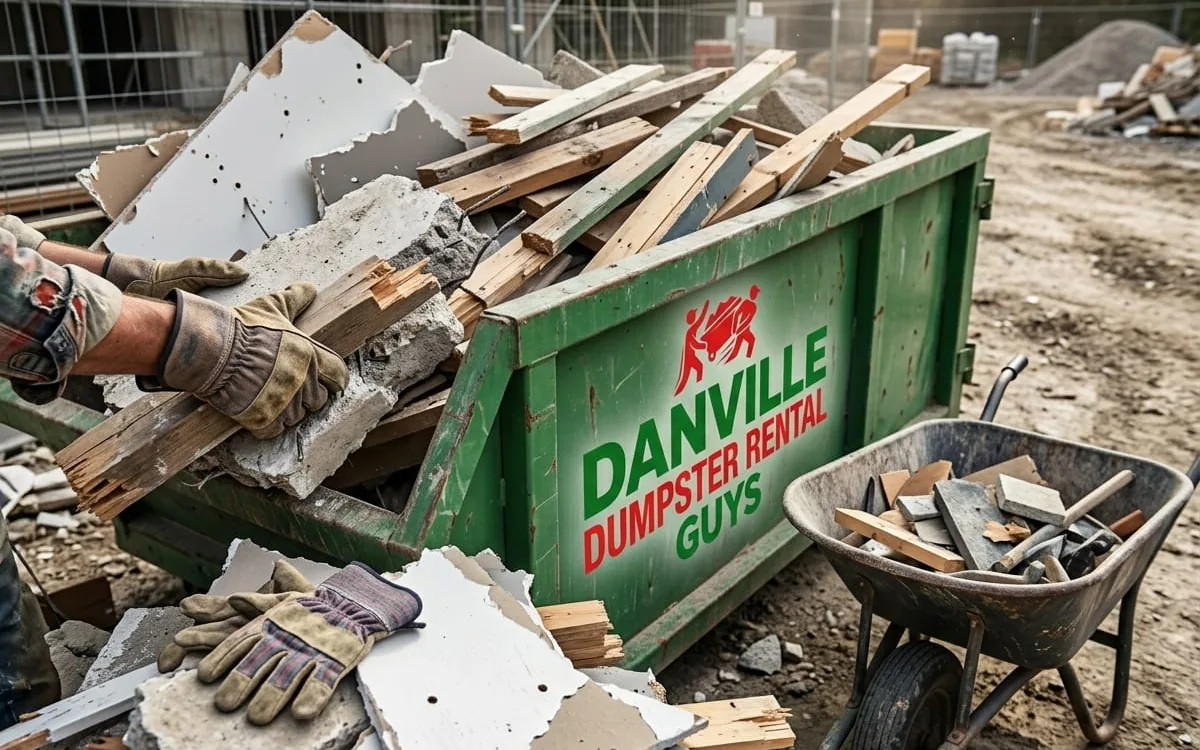
Why heavy debris goes in a 10 yard
Concrete runs to roughly two tons per cubic yard. A 10 yard container filled level with it is already at the legal road weight for the truck carrying it.
Customers regularly ask for a 20 or 30 for a driveway, walkway or foundation tear-out and are surprised when we decline. A 30 yard filled with masonry could not legally be moved, so it would simply sit on the property until somebody removed material by hand.
For larger demolition we run multiple 10 yard containers or stage them across the job. It's more deliveries, and it's the only way it can be done.
Clean concrete kept clean - the Illinois clean-fill route
Clean concrete, block, brick and asphalt can be recycled as clean fill rather than landfilled. In Illinois this runs through the CCDD program - clean construction and demolition debris fill operations - and it can cost less than landfill disposal while keeping the material out of the waste stream.
Clean means clean: concrete and masonry only, with no timber, no protruding rebar tangled through it, no general rubbish. On a demolition or hardscape job, a dedicated concrete box alongside your general container lowers your disposal cost.
Tell us when a load is clean concrete and we'll route it to a CCDD clean-fill operation rather than straight to the landfill.
Prairie clay and wet ground
Beyond concrete, the heavy material here is often the ground itself. The deep, dark eastern-Illinois prairie soil and clay holds water, and it's far heavier per cubic yard than the construction debris beside it - wet clay is heavier still, and the hard freeze-thaw cycle brings up plenty of it.
Spoil from a footing, foundation, slab or drainage job belongs in its own dedicated container and never mixed into general debris - it will hit the truck's weight limit while the box looks half full. Let it dry where the schedule allows and keep the container covered, since rain and snowmelt add weight fast.
Foundation and basement work is common here precisely because the ground heaves with the freeze-thaw, so slab and footing spoil is a routine heavy load - plan for a dedicated container from the start.
Getting a heavy job priced right
Brick, block, old footings and wet clay spoil weigh far more than the volume suggests, and the tonnage in even a modest slab or foundation is usually more than the owner expects.
If you're demolishing a driveway, walkway, slab or foundation, tell us the square footage and rough thickness and we'll work out the number of containers rather than guessing - the answer is routinely more than one 10 yard.
As with every heavy load, the disposal is cleaner kept separate - clean concrete to CCDD clean-fill, the rest tarped to Brickyard Disposal & Recycling.
Where we provide this service
We deliver concrete & heavy debris disposal across Danville and throughout Vermilion County, plus the surrounding Vermilion County and eastern Illinois communities from Tilton and Westville to Catlin, Georgetown and the towns along Route 1 and US-150.
Book concrete & heavy debris disposal in Danville
One call gets you a flat rate, an honest size recommendation and a delivery slot.
(217) 920-0201Concrete & Heavy Debris Disposal: common questions
Why can't I have a 30 yard for concrete?
Because it couldn't legally be transported once loaded. Concrete runs to roughly two tons per cubic yard, so a 10 yard filled level is already at the truck's legal road weight. A larger container would simply sit on your property.
Can old concrete be recycled?
Yes - clean concrete, block, brick and asphalt can go to a CCDD clean-fill operation under Illinois rules, often at lower cost than landfilling. Keep it clean - masonry only - and tell us, and we'll route it that way.
Does prairie clay need its own container?
For any real quantity, yes. The wet eastern-Illinois clay is heavy, so mixed into general debris it hits the weight limit while the box looks half full. Keep spoil separate in its own 10 yard, and let it dry first if you can - rain and snowmelt add weight fast.
How much concrete fits in a 10 yard?
By volume a 10 yard holds plenty, but weight is the limit - filled level with concrete it's already at legal road weight. For a typical driveway or walkway tear-out that usually means one or more 10 yards filled to a level load.